
Understanding titanium alloys aerospace machining properties is essential for precision manufacturing of flight-critical airframe and propulsion structures. These lightweight metals deliver high strength and exceptional corrosion resistance. However, they retain extreme heat at the cutting edge and deflect under mechanical load. Machining titanium demands rigid fixturing, optimized feeds, sharp tooling, and disciplined heat management across all operations.
Modern aerospace manufacturing relies on a synchronized production system. Machine kinematics, cutting geometries, high-pressure coolants, and metrology must work seamlessly together. When any single factor drifts, tool breakdown occurs rapidly and part quality suffers.
Material Fit in Aviation Structures
Titanium combines exceptional strength-to-weight ratios with thermal endurance up to 500 degrees Celsius. It serves vital roles in wing-to-body fairings, landing gear cylinders, and turbine compressor disks. Because titanium expands at rates close to carbon composites, it avoids galvanic corrosion at structural joints.
Engineers select specific grades based on fatigue life and fracture toughness requirements. In high-stress airframe sections, the material resists micro-cracking under heavy cyclic vibration. Controlled milling parameters prevent surface micro-tears that could degrade fatigue performance during flight.
Alloy Families and Microstructures
Commercially pure grades offer high ductility and excellent chemical resistance for fluid lines. Alpha and near-alpha alloys withstand elevated operating temperatures in jet engine bypass systems. Meanwhile, alpha-beta alloys like Ti-6Al-4V represent the workhorse of aerospace structural production.
Beta-rich alloys provide extreme yield strength for heavy forging components. However, their elevated hardness creates severe tool wear during roughing. Machining facilities must calibrate feed rates to the exact metallurgical condition of each delivered heat lot.
Heat Concentration and Thermal Barriers
Titanium exhibits very low thermal conductivity compared to aerospace aluminum or steel alloys. Over eighty percent of machining friction heat concentrates directly at the cutting edge. Without sufficient thermal dissipation, carbide inserts suffer thermal shock and crater wear.
Machinists rely on moderate surface speeds combined with heavy, consistent chip loads. Carrying heat away inside thick chips prevents dangerous temperature buildup in the tool substrate. High-pressure through-spindle coolant directed at the shear zone remains the industry benchmark.
Chemical Reactivity and Edge Build-Up
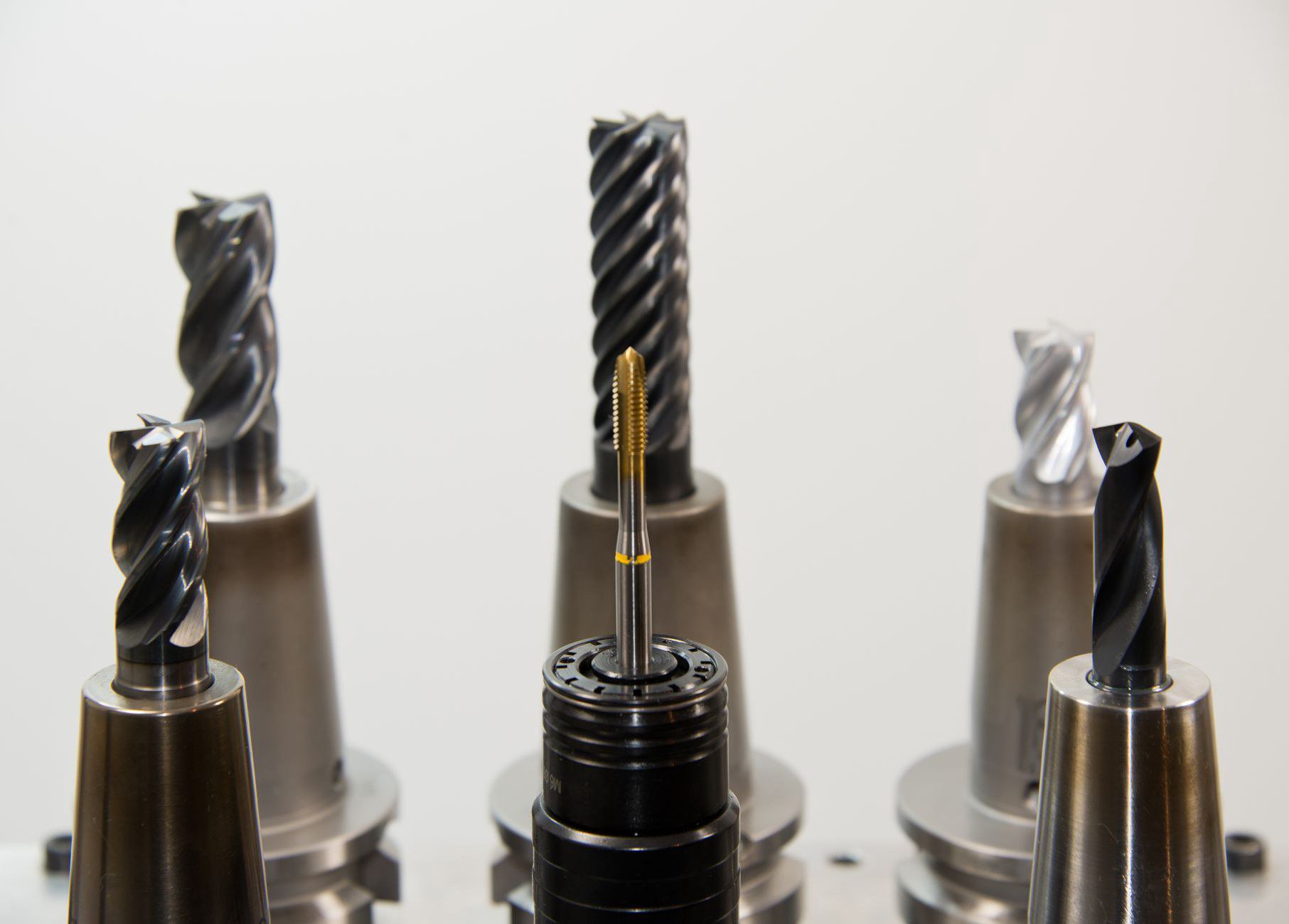
At temperatures exceeding 500 degrees Celsius, titanium reacts chemically with cutting tool materials. Titanium chips weld themselves to the insert rake face, causing catastrophic edge chipping. Smooth chip flow must be maintained to prevent sudden tool failure.
Physical vapor deposition coatings such as titanium aluminum silicon nitride reduce friction significantly. Micro-polished flutes prevent material sticking and reduce galling. Constant positive rake angles ensure clean shearing action without smearing the finished surface.
Elastic Recovery and Workpiece Deflection
Titanium possesses a low modulus of elasticity around 110 gigapascals. Slender ribs and thin floors deflect away from cutting pressure and spring back behind the cutter. This spring-back behavior leads to severe dimensional error and chatter vibration.
Manufacturing engineers design hydraulic modular fixtures to support delicate structural webs during milling. Toolpaths should distribute radial forces evenly to eliminate component flexing. Staged roughing passes relieve internal stress before final contour finishing.
Work Hardening and Chip Load Discipline
Rubbing or dwelling in the cut causes rapid work hardening across the outer grain layer. Once a hardened boundary layer forms, subsequent passes experience accelerated tool breakage. Programmers must ensure tools never dwell at depth or pause along corners.
Climb milling represents the mandatory approach to maximize initial chip thickness at entry. Entry toolpaths should roll into the workpiece using smooth circular arcs. Maintaining uniform chip thickness preserves consistent cutting pressure throughout long tool life cycles.
Optimized Toolpaths and Dynamic Milling
Modern CAM software utilizes trochoidal milling and dynamic motion control algorithms. By maintaining a constant tool engagement angle, spindle loads stay predictable throughout pocket clearing. Dynamic milling prevents tool overload in deep internal radii.
High-efficiency milling strategies allow higher axial depth of cut with small radial step-overs. This distribution utilizes the entire flute length rather than wearing down the tool corner. Smooth directional changes eliminate sudden machine axis decelerations.
Cutting Tool Materials and Edge Geometries
Sub-micron grain tungsten carbide substrates provide high compressive strength and fracture resistance. Sharp cutting edges must feature precise micro-honing to eliminate microscopic notch defects. Unequal flute spacing disrupts regenerative harmonic chatter during aggressive slotting.
Specialized geometry selection balances chip evacuation space against shank core rigidity. Operators should monitor spindle torque feedback to replace worn inserts before failure occurs. Tracking real-time wear progression prevents out-of-tolerance scrap parts.
Coolant Delivery and Swarf Management
Directing coolant jets directly into the cutting contact zone is vital for chip evacuation. High-pressure delivery at seventy bar breaks chips into manageable needle shapes. Water-soluble emulsions require tight concentration control between eight and twelve percent.
Because fine titanium swarf presents serious combustible hazards, machine enclosures require dedicated fire suppression systems. Chip conveyors must evacuate hot turnings continuously to dry holding bins. Proper coolant filtration prevents recirculating abrasive particles through fine tool orifices.
Thin-Wall Rib and Floor Machining
Monolithic aerospace bulkheads often feature thin ribs requiring delicate wall-finishing techniques. Machining opposite sides of a rib simultaneously balances side-deflection forces. Stepped waterline passes protect structural integrity until full depth is achieved.
Unclamping parts between roughing and finishing allows residual forging stresses to relax naturally. Using soft jaws and elastomer backing dampens high-frequency resonance on tall ribs. Careful planning prevents harmonic ringing that degrades surface roughness.
Five-Axis Machine Kinematics and Multi-Axis Access
Simultaneous five-axis machining minimizes setup changes and enables rigid, stubby tool assemblies. Angled spindle orientation allows barrel cutters to finish curved aerodynamic contours rapidly. Our comprehensive turbine tooling guide details multi-axis clearances for complex blisks and impellers.
Short cutting tools reduce cantilever overhang deflection by an order of magnitude. Kinematic accuracy checks on tilting tables prevent geometric errors across large work envelopes. High-torque direct-drive rotary axes deliver the stiffness required for tough titanium grades.
Surface Integrity and Residual Stress Control
Beyond geometric accuracy, flight components require uncompromised metallurgical surfaces. Excessive cutting heat creates a brittle, oxygen-enriched alpha case layer. Destructive testing and eddy current inspections ensure surfaces remain free from micro-cracking.
Controlled shot peening imparts beneficial compressive residual stresses on finished contours. Compressive layers inhibit fatigue crack initiation under extreme flight loads. Qualified machining windows specify maximum permissible flank wear to safeguard alloy grain boundaries.
Precision Inspection and Quality Assurance
Coordinate measuring machines with scanning probes verify intricate profile tolerances. Optical scanners generate digital point clouds to inspect compound freeform surfaces. Fluorescent liquid penetrant testing detects surface-breaking discontinuities that escape visual observation.
On-machine touch probes establish accurate part datums prior to initial cutting passes. In-process probing compensates for thermal expansion drift across extended machining shifts. Rigorous statistical process control tracks critical parameters across high-volume production runs.
Machining Additively Manufactured Titanium
Near-net-shape additive manufacturing produces complex titanium preforms with internal cooling channels. However, printed blanks still require precision machining on mating flanges, o-ring grooves, and bearing bores. Read our detailed additive titanium analysis for post-processing strategies.
Varying stock allowances on printed parts necessitate real-time part probing before milling. Surface roughness variations on raw builds can accelerate cutter wear during first-pass clearing. Adaptive CAM routines adjust depth of cut dynamically based on measured blank geometry.
Digital Traceability and Process Governance
Every aerospace structural element requires complete pedigree documentation from melt to assembly. Material test certificates verify chemical composition and mechanical properties of raw forgings. Digital work instructions log tool serial numbers, NC program revisions, and operator signatures.
Enterprise ERP systems archive machine sensor telemetry for decades of operational service life. Automated tool-presetter data transfer eliminates manual coordinate entry errors at the machine console. Stringent configuration control ensures reproducible quality across global supply networks.
Production Repeatability and Industry Capability
Achieving a successful first article inspection proves theoretical viability on a single component. Long-term profitability requires consistent repeatability across hundreds of production lots. Standardized aerospace machining practices provide the operational framework for reliable production.
Specialized gear designed by Boomerang Ski Bikes demonstrates how advanced metallurgy supports demanding real-world performance. In aviation, disciplined manufacturing processes turn tough titanium alloys into dependable, flight-worthy hardware that powers modern flight.